

.webp)

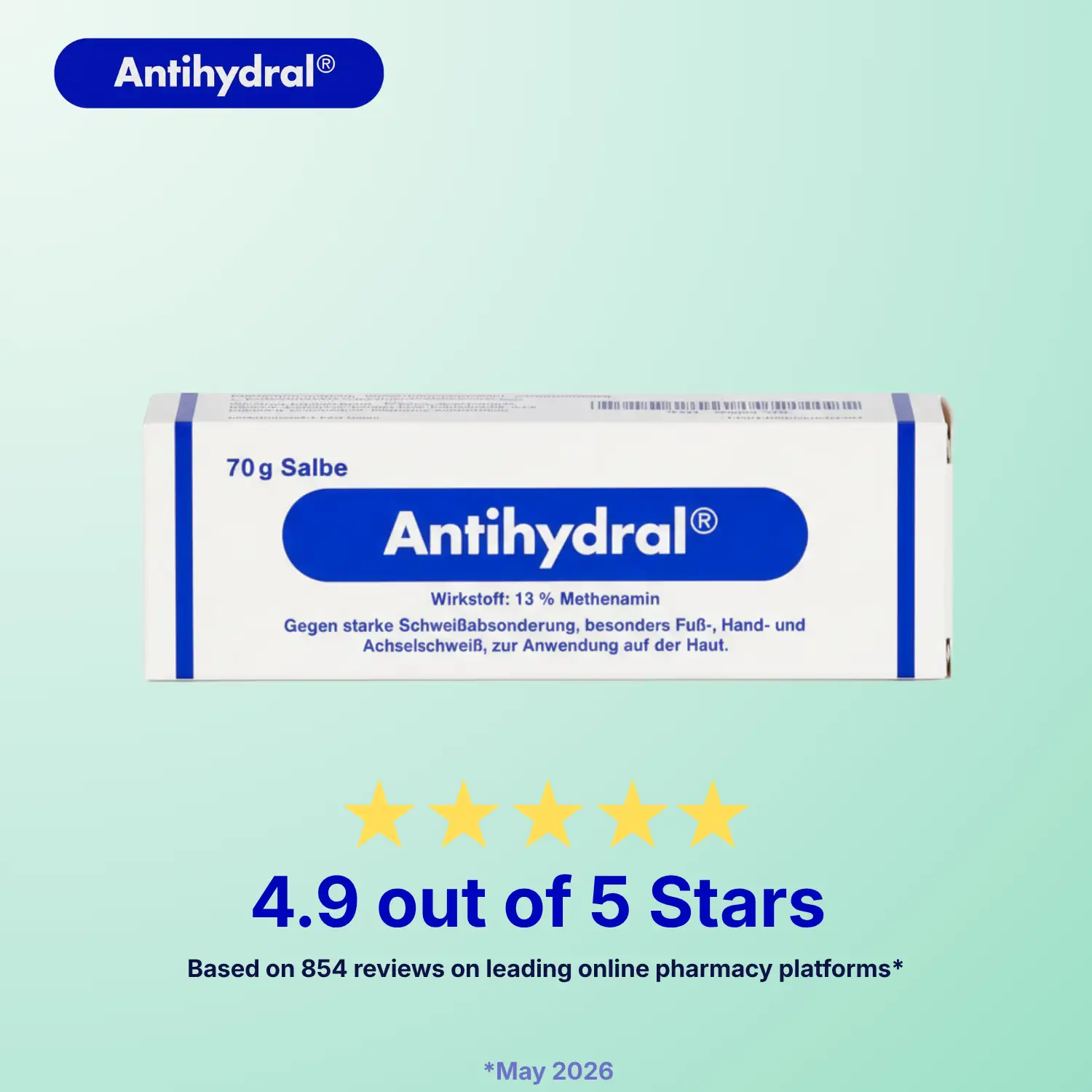
Antihydral® Ointment
Effective for heavy sweating
Topical medication for severe hyperhidrosis. Its high concentration of active ingredients allows for targeted, local treatment with on-demand application on hands, feet, and armpits.

High dosage - 130 mg/g Methenamine
.svg)
Listed as topical application in S1-Guideline for primary hyperhidrosis1
.svg)
Quick application and effective results2
Areas of Application
- Excessive sweating on the feet (plantar hyperhidrosis)
- Sweaty hands (palmar hyperhidrosis)
- Underarm sweat (axillary hyperhidrosis)
- Weeping skin, especially between the toes
Application
- Clean and dry skin
- Apply thinly
- Wait for the individual drying effect, then reapply as needed
- If necessary, also use moisturizing creams like Antihydral® Foot Care Cream to prevent excessive skin dryness
- Do not use on the face or chest area
Methenamine
- Clinically proven active ingredient Methenamine, successfully used for sweat regulation for decades
- Proven safety: No mutagenic effect detected in the AMES test (Leuschner et al., 2013)
- Topical application according to the S-1 Guideline for primary hyperhidrosis
Antihydral® Ointment.
Active ingredient: Methenamine.
Composition: 100 g ointment contains 13 g methenamine. Other ingredients: Talc, Purified water, Zinc oxide, White clay, Glycerol 85%, Carmellose sodium (Ph. Eur.), Eucalyptus oil.
Indications: Antihydral® Ointment for topical application, used for excessive perspiration, especially for foot, hand, and underarm sweat.
Contraindications: In case of hypersensitivity to formaldehyde or any of the other ingredients, Antihydral® should not be used. Antihydral® Ointment must not be applied to weeping or blistered skin areas.
Breastfeeding: Antihydral® Ointment should not be applied to the breast during breastfeeding.
Side effects: Rarely, topical application of methenamine can lead to irritation or hypersensitivity reactions of the skin. In individuals with a formaldehyde contact allergy, eczema or skin rashes may occur.
Dosage: Antihydral® Apply a thin layer of ointment 1-2 times daily and allow to dry. After a few days, perspiration usually decreases, and Antihydral can then be used individually at longer intervals.
Approval No.: 6421167.00.00
For risks and side effects, read the package leaflet and consult your doctor or pharmacist. The medicine is only available in pharmacies in Germany.
PZN: 00052729
Manufacturer's address:
ROBUGEN GmbH & Co.KG
Alleenstr. 22-24
73730 Esslingen
How does Antihydral® Ointment work?
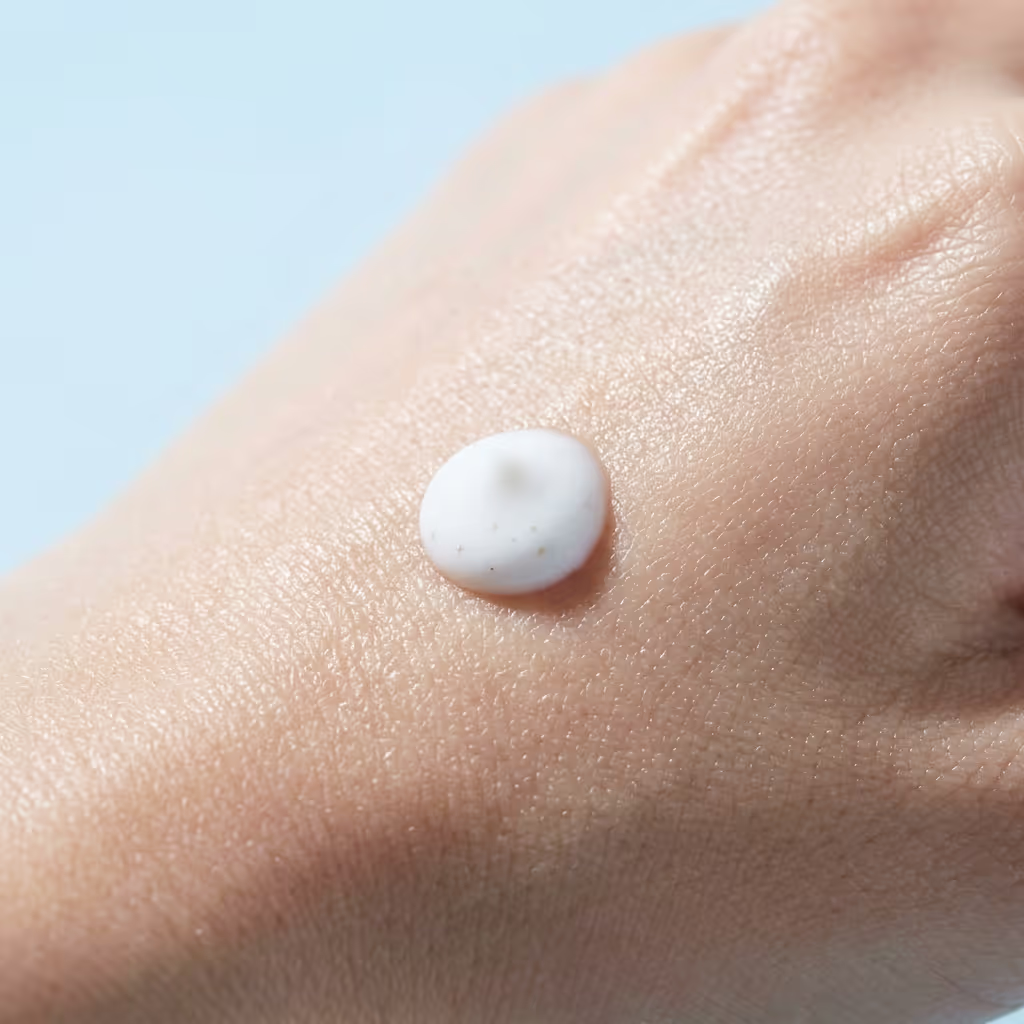
Targeted active ingredient
130 mg/g methenamine inhibits the activity of the sweat glands directly in the treated area of the skin without systemic effects.
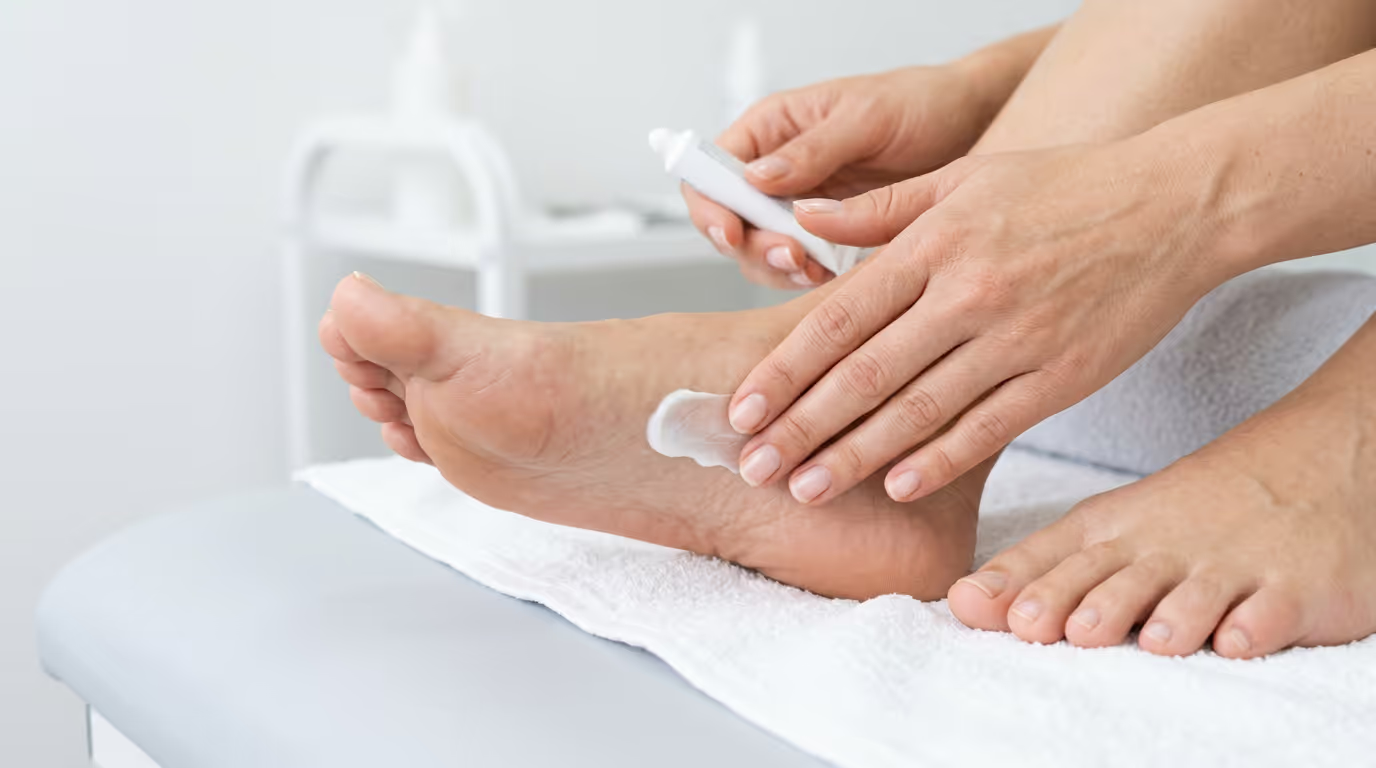
Quick application
As a topical medicinal product, the ointment can be applied quickly and as needed.
Sweat reduction
The ointment does not only work short-term: with regular use, it noticeably reduces sweat production.
How to use Antihydral® Ointment

Clean and dry the skin
Wash the affected area and dry it before applying the ointment.

Apply a thin layer of ointment
Apply a thin layer of Antihydral® Ointment to the affected areas of skin.

Wait for the drying effect
Wait for the effect to occur. This may take a few days. During this time, you can wash normally and continue your daily routine.
.svg)
Regular application
After the initial successful treatment, you can continue using Antihydral® Ointment regularly. Pay attention to an appropriate, needs-based dosage.
Ready to stop exessive sweating?

Stars*
Frequently Asked Questions
The first effects are usually noticeable after just a few days. As a rule, sweating decreases after several days, which indicates that the ointment is effective. With regular use, the skin may become more resistant to chafing and blister formation. Relapses are possible, so continued use may be necessary.
Antihydral® Ointment should initially be applied thinly once. Then, wait until the effect occurs. Once the desired effect is achieved, application as needed is recommended. This can range from weekly to daily, depending on the individual. In case of persistent skin irritation, discontinue use and consult a doctor.
Simply apply a thin layer of the Antihydral® Ointment and cover the area if needed. The dried residue can be washed off the next day. Allow the Antihydral® Ointment to absorb and dry on the surface of the skin. Avoid direct contact with clothing immediately after application.
The duration of effect varies from person to person. Once the desired effect is achieved, the frequency of application can be reduced as needed. Many users achieve a long-lasting effect with occasional application. For precise treatment, consult your doctor or pharmacist.
Yes. Antihydral® Ointment is suitable for use on armpits, feet, and hands. Make sure not to apply the ointment to broken or irritated skin in order to avoid skin irritation.
No, Antihydral® Ointment does not contain formaldehyde as an ingredient. Methenamine naturally supports the antiperspirant effect of the ointment by potentially releasing very small amounts of formaldehyde in the acidic environment of the skin. When applied externally, only minimal amounts are absorbed by the body. Preclinical studies and the AMES test showed no evidence of mutagenic effects of methenamine. The amounts that may theoretically be produced during use are also far below toxicologically relevant levels. Further information can be found in the package leaflet. If you have any questions, please consult your doctor or pharmacist.
No. Antihydral® Ointment is exclusively intended for use on feet, hands, and armpits. Application on the face or chest area is not recommended. Please follow the instructions for use in the package leaflet.
Further Questions?


German Pharmaceutical Company
.svg)
Experience in Pharmaceuticals

Family-Owned
References
*4.9 out of 5.0 star rating (based on a total of 854 reviews across Amazon, DocMorris, ApoNeo, Shop Apotheke, and Apo-Discounter)
1Rzany B, et al. S-1 Guideline: Definition and Therapy of Primary Hyperhidrosis
2Phadke VA, et al. Comparison of topical methenamine, glutaraldehyde and tap water Iontophoresis for palmoplantar hyperhidrosis. Ind J Dermatol Venereol Leprol. 1995 Nov-Dec;61(6):346-8. PMID: 20953017.
For risks and side effects, please read the package leaflet and consult your doctor or pharmacist.