
When Is Medication for Hyperhidrosis Appropriate?
Hyperhidrosis is a medical condition in which the body produces excessive amounts of sweat — often independently of heat or physical activity.⁴ Medication may be considered especially when simple measures such as lifestyle adjustments or topical antiperspirants are not sufficiently effective and the symptoms significantly interfere with daily life.¹⁹
Before starting medical treatment, the underlying cause of hyperhidrosis should always be evaluated by a physician. It is important to distinguish between primary and secondary hyperhidrosis, since secondary forms may be caused by metabolic disorders, medications, hormonal changes, or other medical conditions.⁴
Over-the-Counter Options: Antiperspirants and Topical Products
Aluminum Chloride Antiperspirants
Topical antiperspirants are considered first-line therapy for focal hyperhidrosis.¹⁹ They commonly contain aluminum chloride or aluminum chlorohydrate, which partially block the ducts of the sweat glands and thereby reduce sweat production.⁵
These products are typically applied in the evening to dry skin so the active ingredients can penetrate the sweat glands overnight.⁵ Studies show that many people achieve good results with aluminum-containing antiperspirants.⁶ At the same time, skin irritation or itching may occur, especially during the initial phase of treatment.⁵
Antihydral Ointment for Hands and Feet
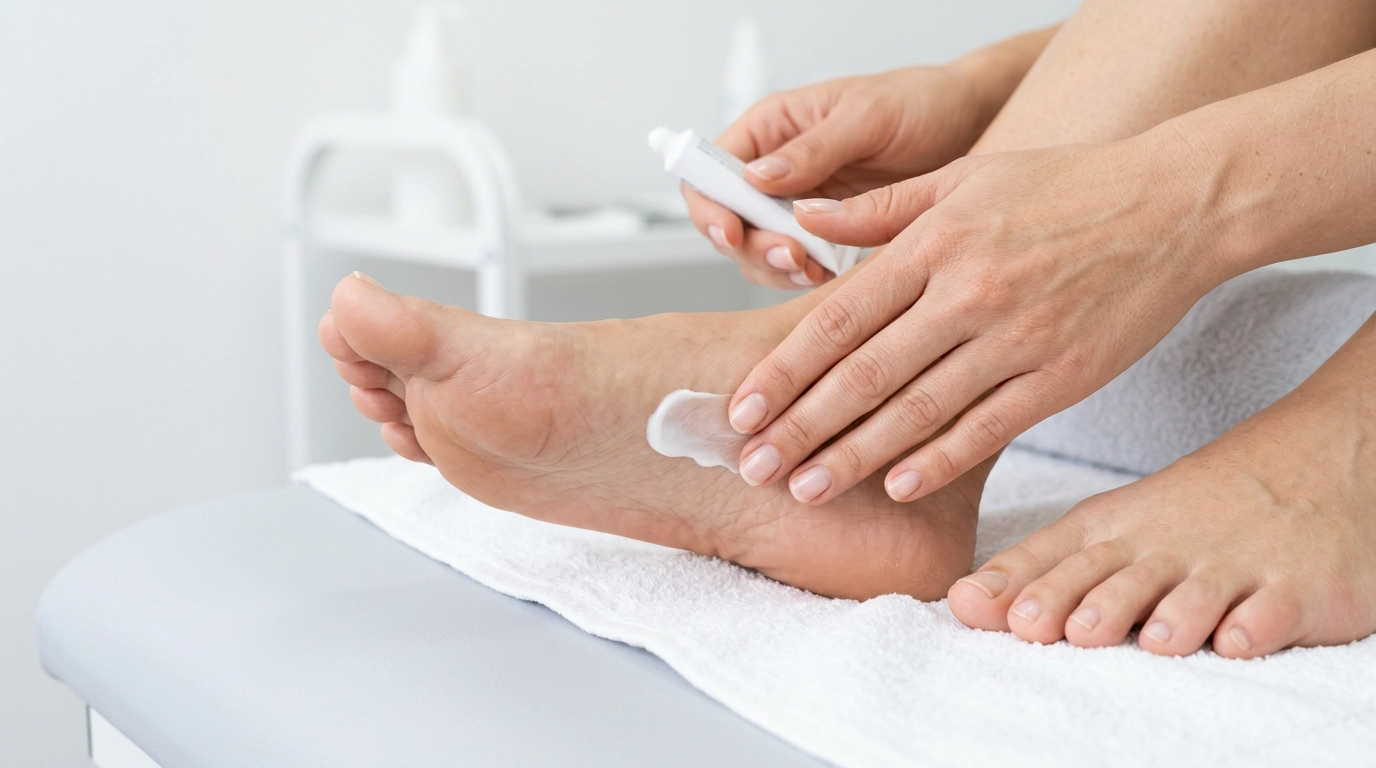
Antihydral Ointment is used as a supportive treatment for hyperhidrosis affecting the hands and feet. The active ingredient methenamine has traditionally been used to help reduce sweat production. The ointment is applied regularly to the affected skin areas.
Additional formulations such as sprays or creams are also available and may be used differently depending on the affected body region.
Prescription Medications for Hyperhidrosis
If topical treatments are not sufficiently effective, systemic medications may be considered. These medications act on the nervous system pathways involved in sweat production.¹⁹
Anticholinergics: Oxybutynin and Others
Anticholinergic medications block the action of acetylcholine, a neurotransmitter that plays an important role in activating sweat glands.⁴
Oxybutynin is among the most commonly prescribed systemic medications for hyperhidrosis. Studies show that oxybutynin can reduce sweating and improve quality of life in many affected individuals.⁶ Common side effects include dry mouth, constipation, and fatigue.⁴
Bornaprine is also used in certain cases. Which medication is most appropriate depends on the individual situation and overall tolerability.
Glycopyrronium Bromide
Glycopyrronium is another anticholinergic medication that has been studied both as a topical and systemic treatment. Clinical studies have shown that topical glycopyrronium preparations can effectively reduce axillary hyperhidrosis.⁸ ⁹
The most common side effects include dry mouth and local skin reactions.⁸
Botulinum Toxin as a Medical Treatment Option
Botulinum toxin has been used for years in the treatment of focal hyperhidrosis — particularly in the underarms, hands, and feet.¹⁴ ¹⁵ The substance blocks signal transmission between nerves and sweat glands, thereby reducing sweat production.¹⁴
The effects usually last several months before repeat treatment becomes necessary.¹⁴ Botulinum toxin is considered an established treatment option, especially for treatment-resistant axillary hyperhidrosis.¹⁹
Which Medications Can Trigger Hyperhidrosis?
Certain medications may themselves cause excessive sweating as a side effect or worsen existing symptoms. These include antidepressants, hormonal medications, and sympathomimetic drugs.⁴
If there is suspicion that medication is contributing to sweating, this should be discussed with a physician. Patients should avoid changing or discontinuing prescribed medications without medical guidance.
Tips for Choosing the Right Treatment
The most suitable treatment depends on the severity of hyperhidrosis, the affected body areas, and individual tolerability.¹⁹
For mild to moderate focal hyperhidrosis, topical antiperspirants are generally recommended first.¹⁹ In more severe cases or when topical treatment is insufficient, systemic medications, tap water iontophoresis, or botulinum toxin injections may be considered.¹³ ¹⁴ ¹⁹
Because all treatment options may have side effects or limitations, treatment decisions should always be made together with a qualified physician.







.svg)