
Why Sweaty Hands in Climbing Are More Than Just Annoying
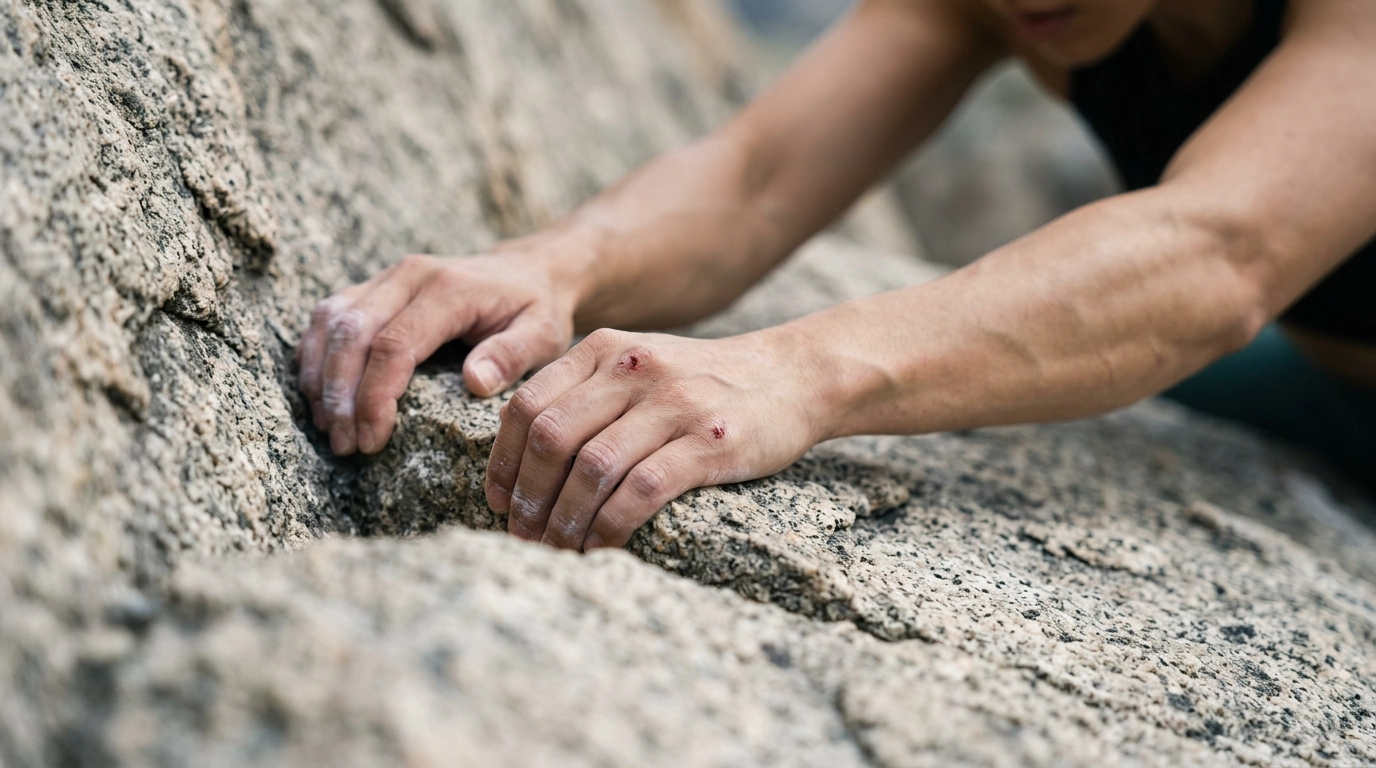
Climbing depends on friction. Whether you’re holding a sloper, crimp, or open-hand grip, the friction between your skin and the rock or climbing hold determines whether a move succeeds or not. Sweat creates a thin film between the skin and the surface, reducing exactly that friction. This is especially problematic in indoor climbing gyms, where holds are often smooth and heavily used. Outdoors — on granite, sandstone, or limestone — moisture can even become a safety issue: a damp grip on an exposed section is not just a performance problem, but a real risk.
There is also a psychological aspect. Anyone who knows their hands are about to start sweating again tends to climb differently — more cautiously and with more tension. That tension, in turn, increases sweating. It’s a cycle many climbers are familiar with.
Chalk: What It Can and Can’t Do
Chalk — magnesium carbonate — is the standard solution for sweaty hands in the climbing community. It absorbs sweat, slightly roughens the skin, and temporarily improves friction. For occasional sweating caused by physical exertion, chalk is a proven and effective solution.
The problem is that chalk treats the symptom, not the cause. People who sweat heavily — more than would normally be expected from exertion or heat — often find that even generous amounts of chalk are gone after only a few moves. Their hands simply sweat through it. In cases of pronounced hyperhidrosis, meaning excessive sweating of the hands and feet, chalk alone is often not enough.
In addition, many climbing areas and gyms now have restrictions on chalk use to protect rock surfaces and climbing holds. Loose chalk has already been banned in some locations. Liquid chalk — liquid magnesium carbonate with alcohol — is often the preferred alternative.
Antiperspirant Products: What Climbers Actually Use
In forums, climbing gyms, and around bouldering mats, one question comes up repeatedly: what actually helps with chronically sweaty hands? In addition to chalk, many climbers have experience with antiperspirant products.
Antihydral® Spray is a cosmetic antiperspirant that is well known within the climbing community. It is applied to dry skin and may help reduce local sweat production. Typically, climbers apply it in the evening before a climbing session, wash it off the next morning, and climb with noticeably drier hands.
Antihydral® Ointment is a medicinal product that is also widely known among climbers. The application follows a similar routine: apply to the palms in the evening and wash off in the morning. As a medicinal product, Antihydral® Ointment is subject to specific usage instructions; always read the package leaflet before use and consult your pharmacist or doctor if you have any questions.
Combining Antiperspirants and Chalk
For many climbers, combining both approaches provides the best results. Those who regularly use antiperspirant products and additionally apply chalk while climbing often report significantly better performance than with chalk alone. The reduced sweat production creates the foundation, while chalk fine-tunes grip and friction directly on the hold. This combination is widely used in the climbing community and is often considered the most practical approach.
Skin Care for Climbers’ Hands: The Often Forgotten Balance
Climbers know the dilemma well: on one hand, the skin on the palms should stay dry and grippy; on the other, it needs proper care to avoid cracking and bleeding. Calluses are useful, but calluses that become too thick can tear — while skin that is too thin becomes painful.
Anyone using antiperspirant products should not neglect skin care. Ideally, Antihydral products should be balanced with good hand moisturization on rest days. It is also advisable to care for the hands after every climbing session and to treat cracks immediately before they deepen. Dry but healthy skin provides better grip than cracked skin or hands overloaded with moisturizer.
When Sweaty Hands May Indicate Hyperhidrosis
If sweating is so severe that chalk barely helps, the hands remain damp even at rest, and the sweating affects everyday life, this may indicate hyperhidrosis — a medical condition in which the sweat glands are overactive.
Hyperhidrosis is treatable. Anyone interested in learning more about excessive sweating and the available treatment options can find additional information in our guide: What to do about hyperhidrosis?







.svg)